Interview with Nicola Brisu, Carlo Tarcisio Moi , Riccardo Ortu
Special Mention of the 2024 Edition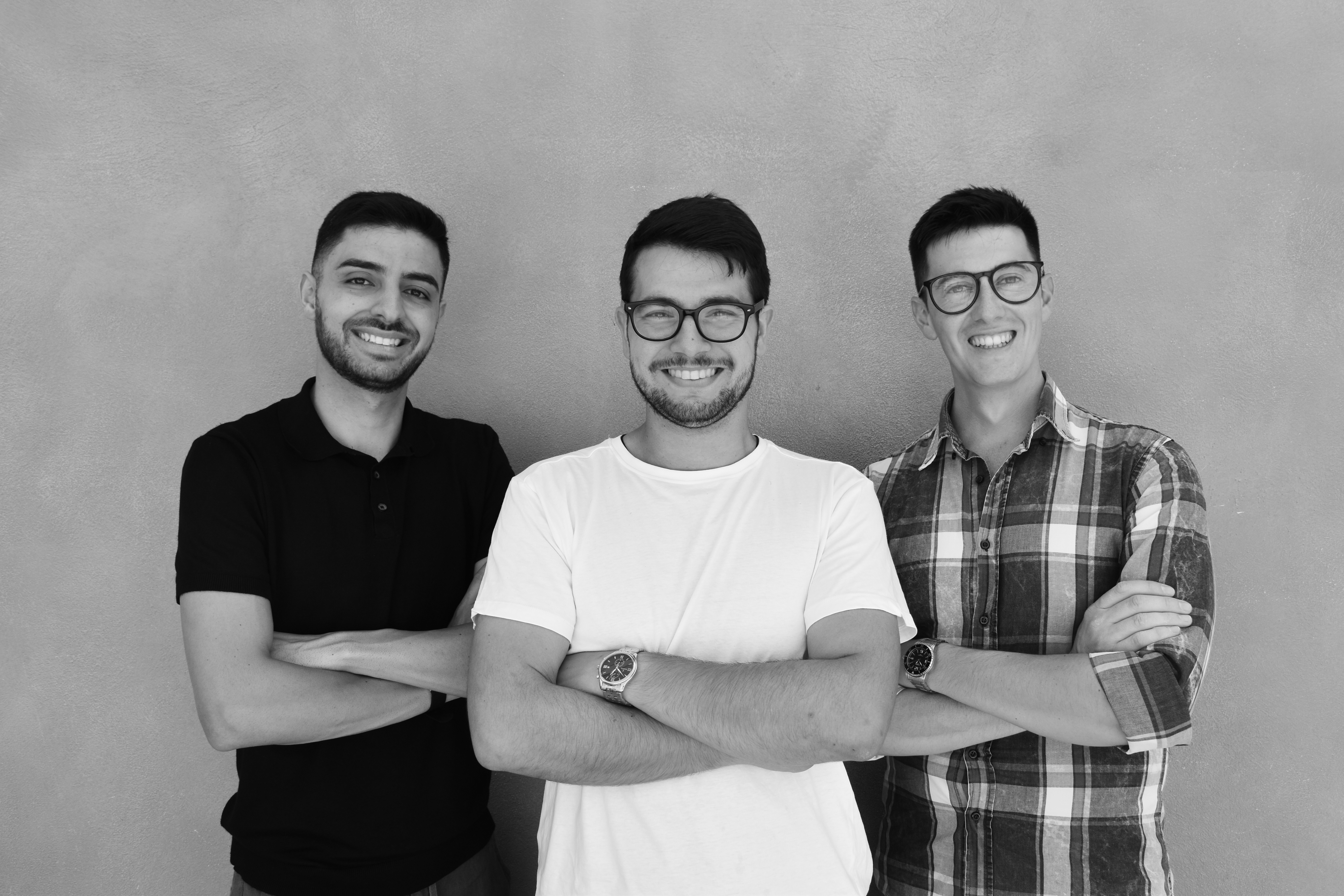
Can you tell us more about you?
We are a team of three graduate students from the University of Cagliari, Italy. We graduated a year ago and we come from the same academic background. From the beginning we understood that we could be a good group of colleagues because we are driven by the same ideas and goals of architecture.
What was your feeling when you knew you were among the top projects of the competition?
Completely unexpected! We put a lot of energy and enthusiasm into this competition but at the same time we didn't expect such a satisfactory result. We are participating in some competitions together and we are achieving good results, but this is the most important, cause it’s a very big competition and we are happy to have reached such a good position.
Can you briefly explain the concept of your project and which is the relationship between it and the women’s health?
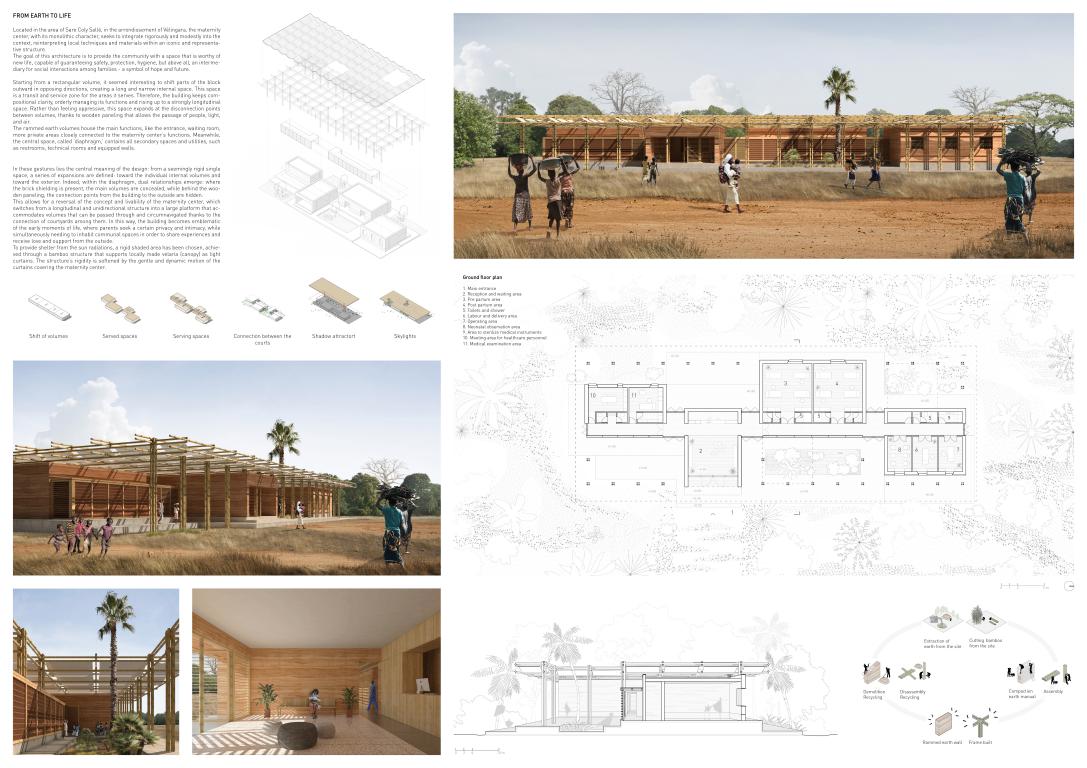
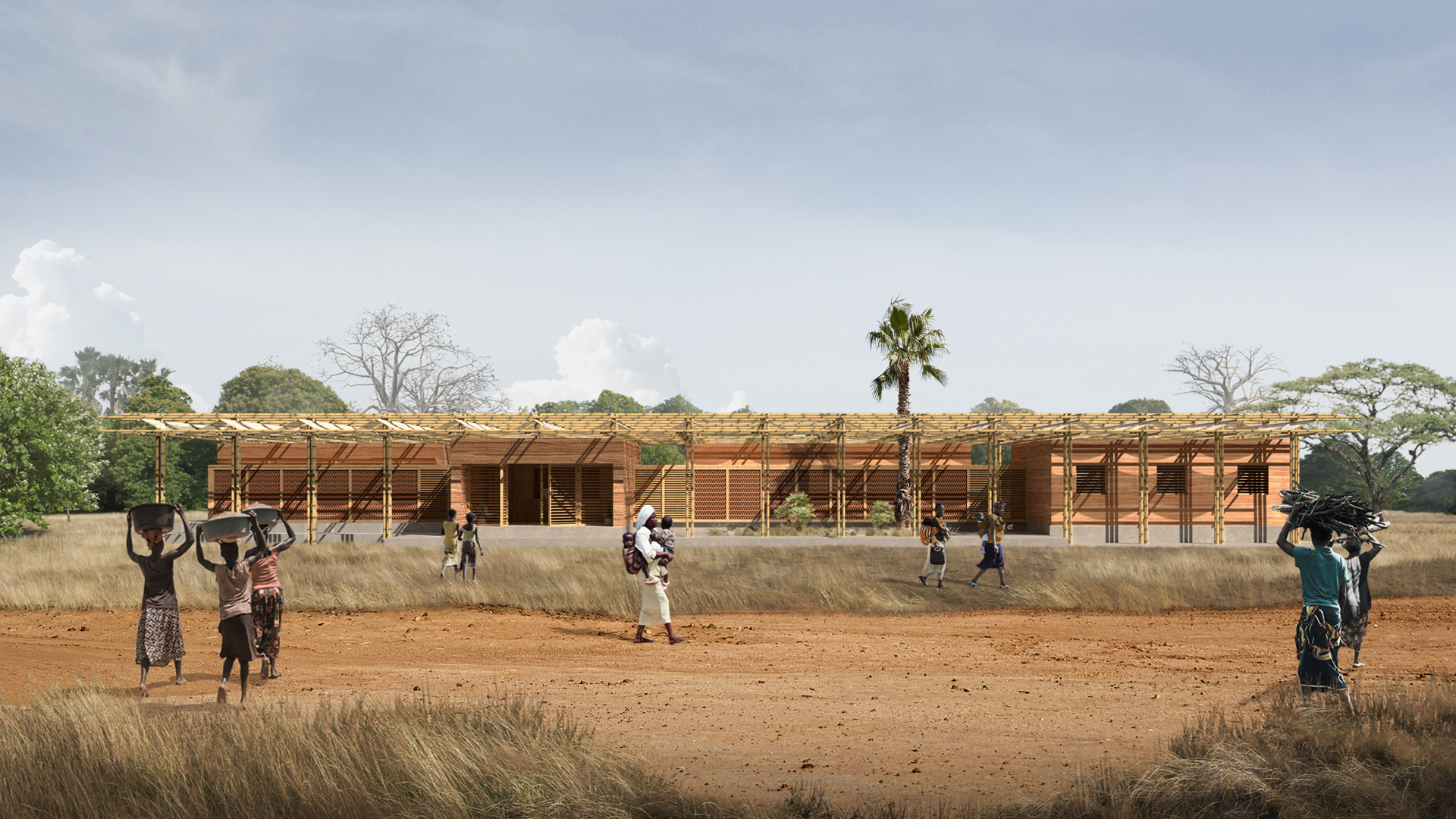
The concept of the project starts from a rectangle, into which it seems interesting to translate some parts, generating a long and narrow internal space. This space constitutes the soul of the building, as it distributes the main rooms and allows the serviced spaces to be divided from the service ones. This approach develops the possibility of isolating the main rooms but at the same time, if necessary, connecting them. We think it is an interesting approach to guarantee sociability and community (given that the corridor opens onto the external gardens) and at the same time privacy for women. The relationship between our architecture and women's health lies in this dialectic between privacy and sociability, which in the early stages of a newborn's life are also needs of a mother.
Which aspects of a design do you focus more during designing?
When we start designing we focus on many things. First of all, we take care of the context and the goal of the project to make sure that all the community understands and appreciates it. For us, compositional and constructive clarity is very important, in this project we tried to show and share how important it is, developing an idea based on the distribution and articulation of spaces. But the most considerable approach is to work with the correct human and social identity, using traditional materials and typical architectural forms to make people absolutely fall in love with the spaces, to make sure that they will use and appreciate the building. Because a project is also a reason to improve the identity of places.
Has your design been inspired by other projects in developing countries or past projects of Kaira Looro?
In every project the first approach is to take inspiration from the context. This is why our steps started from the analysis of the general conditions of Senegal: culture, climate, materials, etc. At the same time, recent projects in developing countries have been frequent references for us, not only for the Maternity Center but in general, as a way to research and study the points of current architectural needs. This is why works like those of Francis Kéré constitute important references: for social and human purposes, but also for the use of the vernacular and techniques typical of contemporary works.
How your idea of architecture can improve health in developing countries, and how the local community concerned could perceive this architecture?
Our idea aims to improve health in developing countries because the building is easily replicable and easy to construct. The most important spaces are clean, protected and guarantee hygiene and safety, important requirements for improving health. Gardens are also important: all good architecture needs common and green spaces to improve sociality. It can be considered a sort of model that can inspire other projects: this is why we think that the project can improve health, not only in the competition area, but also in other Countries. But above all the technical choices and materials, as well as the shapes, are contextualized in such a way as to ensure that it can be part of the landscape. Furthermore, it is designed to be easily achievable, in order to guarantee that, right from the construction stages, it is shared and welcomed
From your point of view, what are the responsibilities of architects in dealing with complex issues such as health’s rights in developing countries?
The role of the architect is as beautiful and important as it is complicated and full of responsibility. Working in developing countries can be considered an exciting challenge, due to the difficulties linked to the context and economic, health and environmental conditions. The architect therefore has a great responsibility in increasing the development of these Countries, which require a 360-degree figure capable of bringing social, architectural and health aspects into dialogue. How? Proposing examples of simple, modular, replicable but above all coherent design with the history and context in which it operates, to maintain the identity of the places and at the same time improve their reality.
The competition registration fee was devolved to the non-profit organization Balouo Salo that helps people in disadvantage area of Senegal. How has it affected you approach to the competition?
It is an important initiative: knowing that the registration fee was devolved to people in disadvantage areas of Senegal can only be a source of pride, it is nice to be aware that we can contribute, in our small way, to improving these realities. It is undoubtedly connected with our vision and the mentality with which we developed the project, whose goal is to help the local community.
The aim of the competition is also to give professional opportunities to young architects with internship prize and visibility at international level, and we wish your team the best achievements for your career. How do you think you will be in next 10 years? According to you, can this award affect your future?
We are recent graduates, so it's hard to imagine ourselves in 10 years. However, we believe that the principles that currently drive us to design will remain constant in our career, which will be tortuous and complex, but hopefully full of satisfaction. We don't know how much impact this competition will have, but it seems like a good starting point for us: it gives us visibility but above all it gives us the courage to believe in our abilities and push ourselves beyond our limits.