Interview with Paulina Czaja, Amelia Domisch, Maja Cierpialowska, Nina Borkowska
Special Mention of the 2024 Edition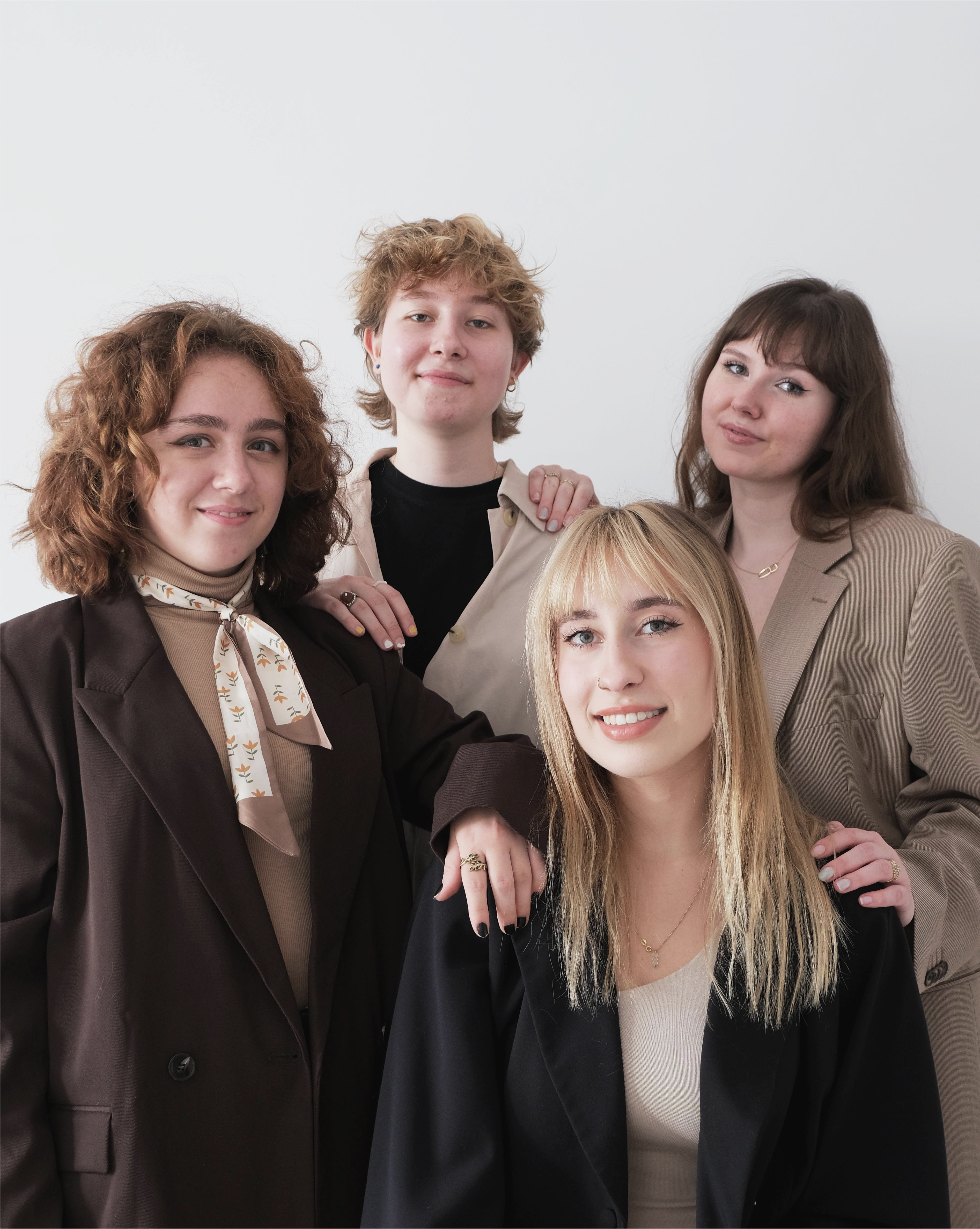
Can you tell us more about you?
We are a team of five architecture students studying at the Technical University in Gdańsk. We met on the first day of architecture course and bonded immediately. Since then, we have worked on several projects together. Our cooperation has not only refined our skills but also solidified our bond as a team. Each of us brings a unique set of skills to the table, and in combination with our ability to communicate effectively, we work like a well-oiled machine.
What was your feeling when you knew you were among the top projects of the competition?
The moment we saw our work among the special mentions on the website was unbelievable for us. It truly felt surreal as it was our first big accomplishment. The news filled us with an overwhelming sense of pride and joy, validating every late night and every long-lasting discussion we had during the project. As we celebrate our success, we are already looking ahead to new challenges and opportunities.
Can you briefly explain the concept of your project and which is the relationship between it and the women’s health?
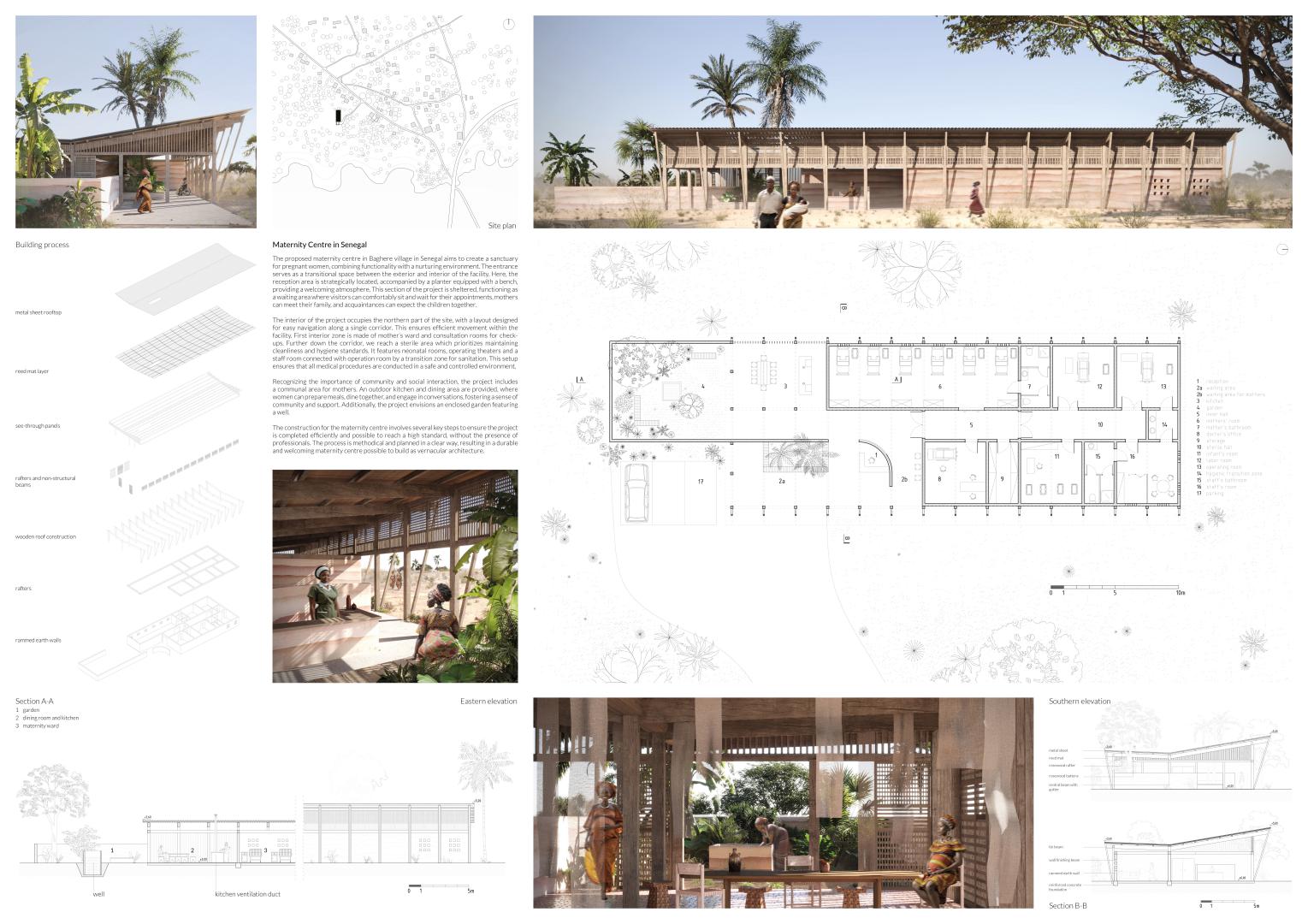
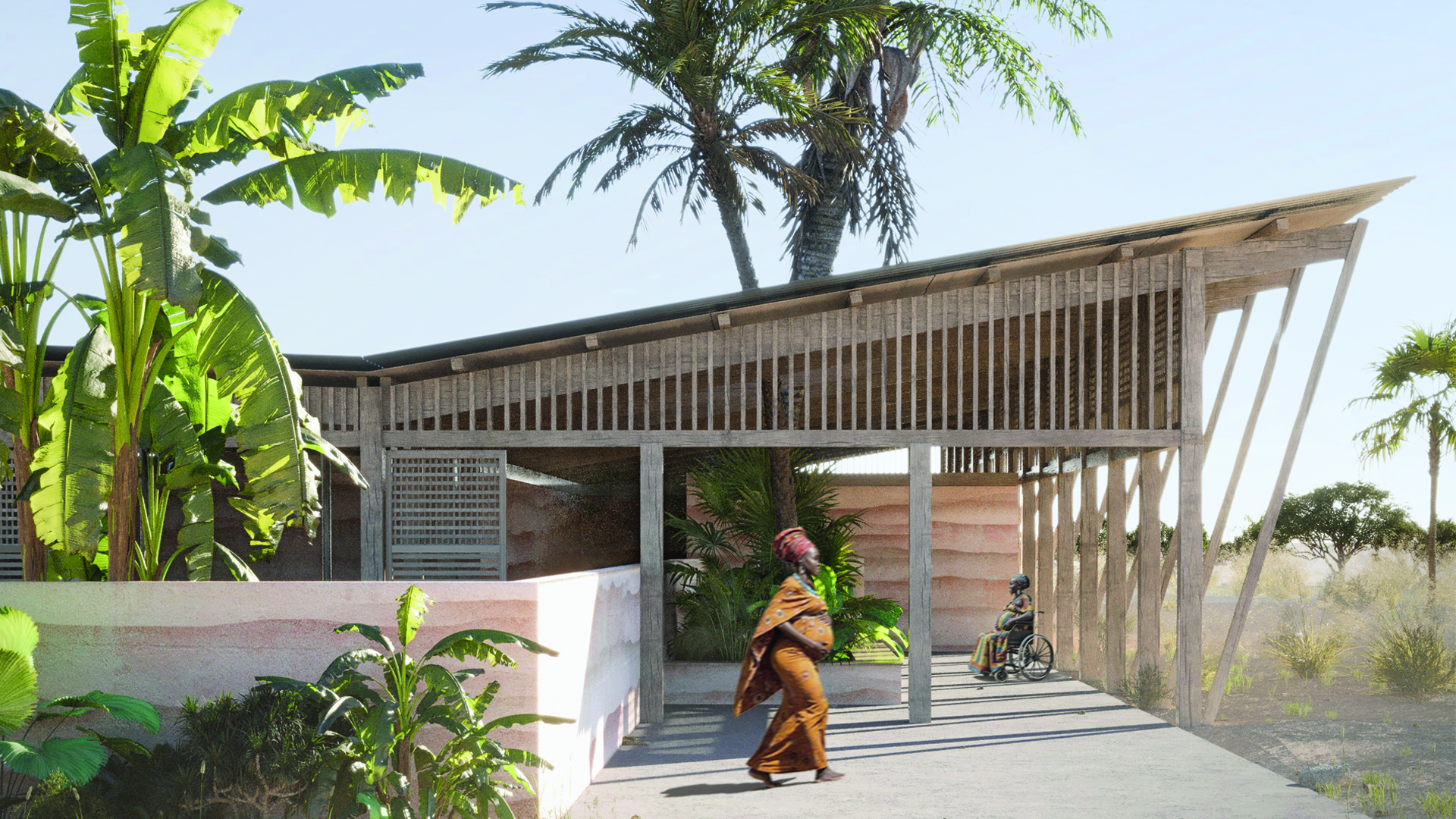
We started by defining the zones and setting priorities, in order to keep the project fully functional and operational rooms sterile. Afterwards, we focused on developing the ideas and searching for the concepts. We wanted our project to be centered around women’s recovery and recognizing the importance of the community and social interactions. Not wanting it to be only about basic needs, we also aimed to create a friendly space which can allow future and freshly-baked mothers to focus on themselves and feel taken care of. To achieve this, we localized some common areas in the project, them being a garden and a kitchen with a dining area. Contrary to this open space, the part with hospital functions is fully closed. It is divided into the clinic zone and the sterile hospital sector. Having this defined, we moved into designing the shape and selecting materials. Our idea was to separate the construction of walls and an elevated rooftop, so they mostly are independent of each other.
Which aspects of a design do you focus more during designing?
For us, the most important aspects in design are: the relationship of the building with the environment and how it can blend in with the landscape or relate to the culture of the users, and a simple functional layout, which we always try to create so that the use is intuitive and logical. Moreover, we try to achieve a sustainable project by buildings that have a low carbon footprint, with environmentally friendly, local materials.
Has your design been inspired by other projects in developing countries or past projects of Kaira Looro?
Yes, we carried out an in-depth analysis of buildings in Senegal, focusing on buildings in a similar theme to the competition. Thanks to this, we were able to choose the right construction and layout of the building, suitable for the climate of Casamance region. We were reviewing the competition works from previous years, but we wanted to do something our way.
How your idea of architecture can improve health in developing countries, and how the local community concerned could perceive this architecture?
Our idea of a maternity hospital can be exemplified in the way of designing the functional layout, where, despite modest conditions, we managed to maintain the highest sterility and separation of “dirty” and “clean” zones. Thanks to this future mothers can see their children in a dignified and secure environment. We would be very pleased if the local community perceived our project as a place where mothers can feel safe and sound, interact with each other and truly feel like their child is being born in the right place.
From your point of view, what are the responsibilities of architects in dealing with complex issues such as health’s rights in developing countries?
A proper design can lead to reducing inequalities in quality healthcare accessibility. Well-designed spaces of public facilities can benefit also the impoverished, while high-standard places can often be attended only by wealthier ones. Architects have the power to significantly improve public health through thoughtful and innovative design of health facilities. This involves creating naturally-lit and well-ventilated spaces, which are essential in reducing the spread of airborne diseases and enhancing the overall well-being of patients and healthcare workers. Designing efficient sanitation facilities within these centres plays a crucial role in promoting hygiene and preventing the spread of infections. Thoughtfully designed zoning can greatly impact public health by encouraging better hygiene practices.
The competition registration fee was devolved to the non-profit organization Balouo Salo that helps people in disadvantage area of Senegal. How has it affected you approach to the competition?
Knowing it goes to a Balouo Salo organization and not for commercial use, we did not hesitate at all. It encouraged us even more to take part and ensured us that this competition aims to make a real change for disadvantaged areas which lack certain facilities.
The aim of the competition is also to give professional opportunities to young architects with internship prize and visibility at international level, and we wish your team the best achievements for your career. How do you think you will be in next 10 years? According to you, can this award affect your future?
In the next 10 years we imagine ourselves to be actively working in the field of architecture. We dream to create our own studio since we share similar views and we work really well together. We hope that, wherever we will be, we will stick together either working or as a group of friends. This early career success can help us build a reputation as talented and innovative architects. Moreover, we believe that it will also enrich our portfolio, which is crucial for future career advancement.