Interview with Teresa Haddad, Mazen Sfeir
Special Mention of the 2024 Edition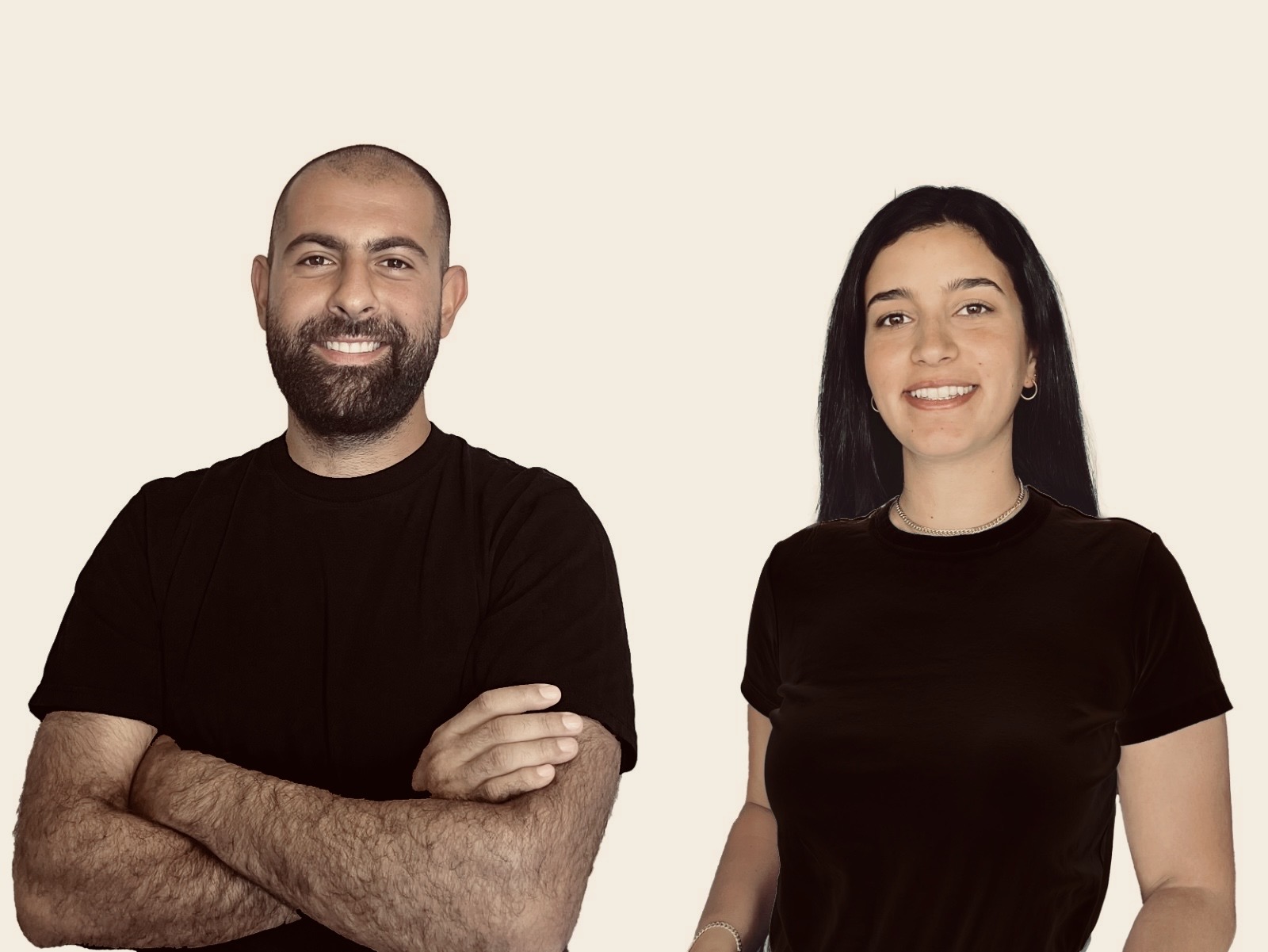
Can you tell us more about you?
We are a team of two architects, Térésa Haddad and Mazen Sfeir, who met 10 years ago during our studies at the Académie Libanaise des Beaux-Arts. We have always admired each other’s work and shared common beliefs about what architecture should be, which recently led us to combine our forces to create “Unblind Architecture” a project where we turn blind ideas into reality. Currently based between Beirut, Paris, and Montreal, we design and collaborate remotely thanks to the strong chemistry and complementary ways of thinking we share. Our approach focuses on highlighting concepts and revealing emotions through simple lines. When designing, we aim to be in harmony with nature and imagine ourselves experiencing the journey to adequately address the needs of the users.
What was your feeling when you knew you were among the top projects of the competition?
We were incredibly excited when we received the news, especially because we hold great respect for the jury members and their decisions. "Flow of Life" is a heartfelt solution we developed to address the issue of inaccessible healthcare. Being recognized is incredibly gratifying and reinforces our passion for making a positive impact through architecture.
Can you briefly explain the concept of your project and which is the relationship between it and the women’s health?
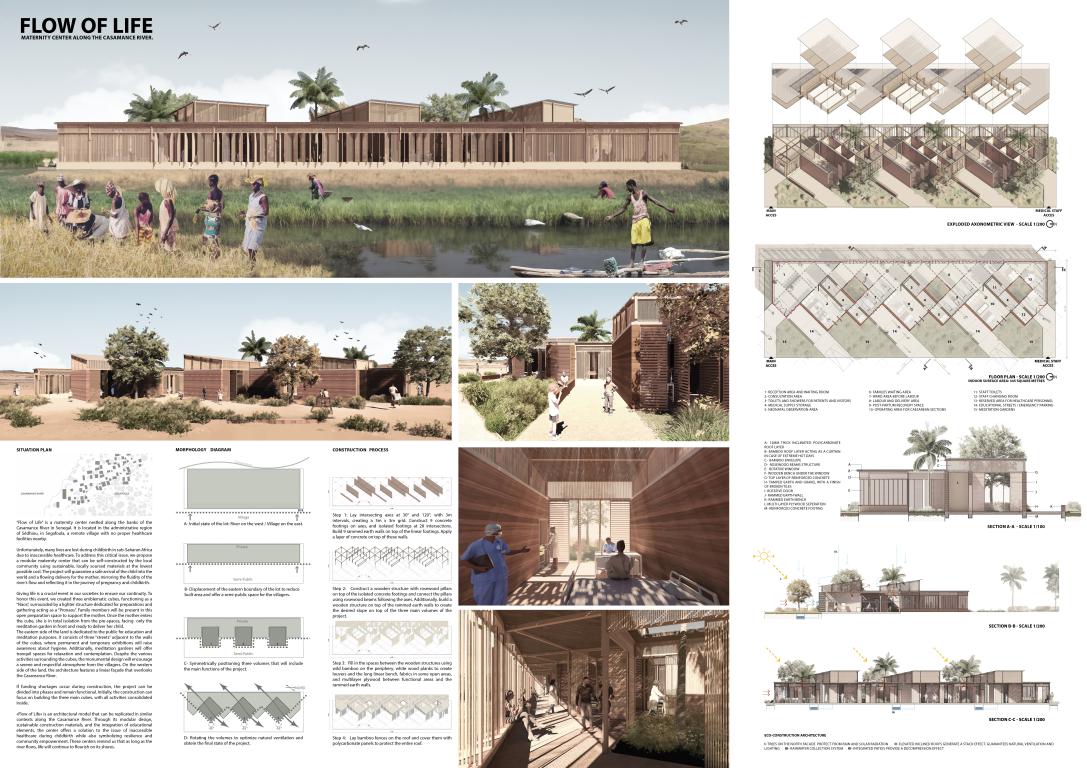
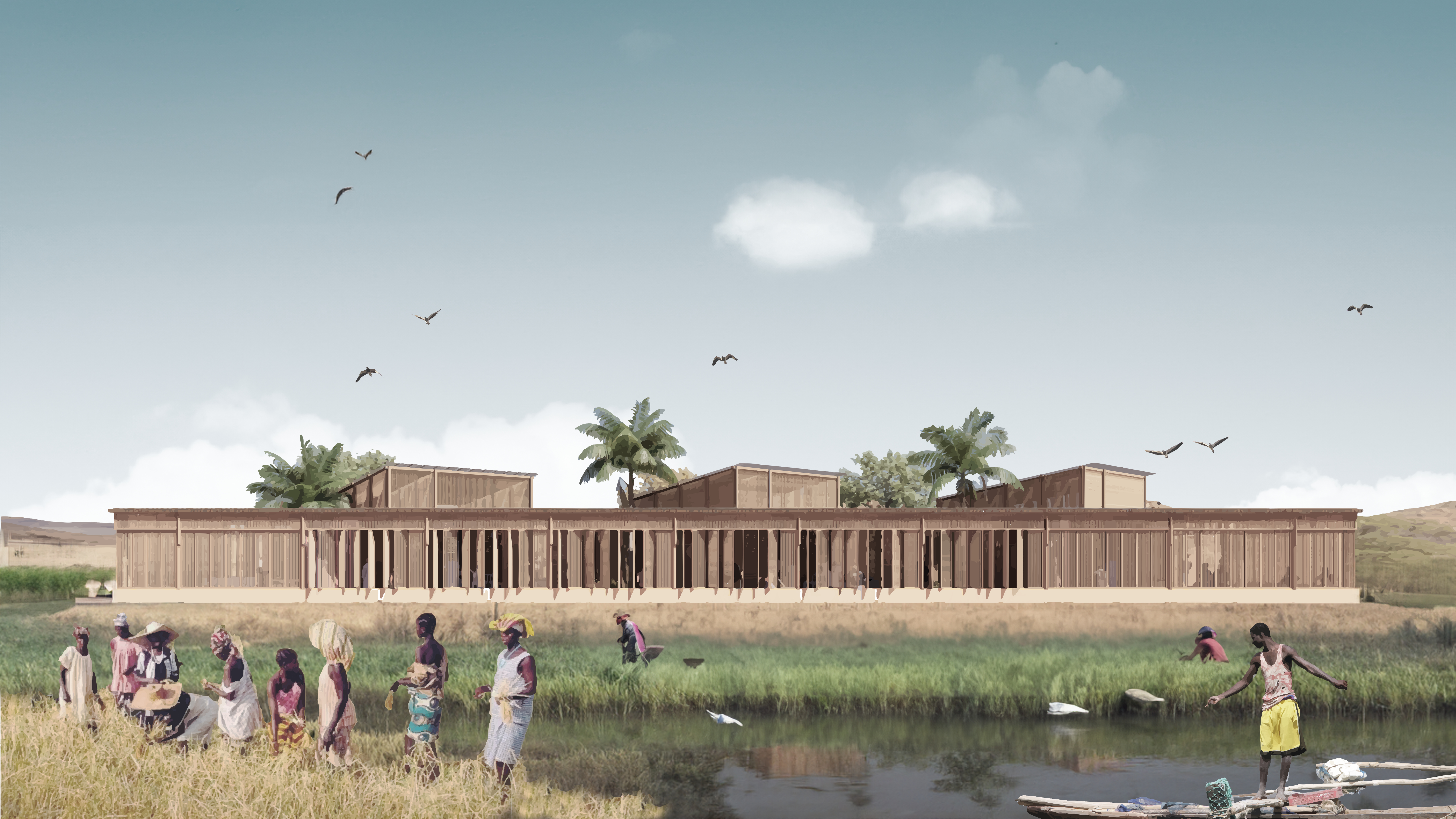
Our concept revolves around giving life which is a crucial event in our societies to ensure our continuity. To honour this event, we created three emblematic cubes, functioning as a “Naos”, surrounded by a lighter structure dedicated for preparations and gathering acting as a “Pronaos”. Family members will be present in this open preparation space to support the mother. Once the mother enters the cube, she is in total isolation from the pre-spaces, facing only the meditation garden in front and ready to deliver her child. Flow of Life not only guarantees a safe arrival of the child into the world but also take into consideration women s health, it ensures a flowing delivery for the mother, mirroring the fluidity of the Casamance river's flow and reflecting it in the journey of pregnancy and childbirth.
Which aspects of a design do you focus more during designing?
During the design process, we focus on keeping our ideas bold and our lines clear. To achieve this, we continually reassess our concepts as we integrate key parameters: context, functionality, sustainability, user experience, aesthetics, flexibility, and cost. Effective team communication and constructive criticism among members are also essential for achieving the best possible results.
Has your design been inspired by other projects in developing countries or past projects of Kaira Looro?
We drew inspiration from previous Kaira Looro projects to align with the competition's principles. The projects serve as a valuable resource emphasizing the use of sustainable, locally sourced materials that can be self-constructed by local communities at an affordable cost.
How your idea of architecture can improve health in developing countries, and how the local community concerned could perceive this architecture?
"Flow of Life" is an architectural model that can be scaled and replicated in similar contexts along the Casamance River. Through its modular design, sustainable construction materials, and integrated educational elements, the centre provides a solution to healthcare inaccessibility during childbirth while also symbolizing resilience and community empowerment. In cases of funding shortages during construction, the project can be phased. Initially, construction can prioritize building the three main cubes, consolidating all activities inside. The local community will perceive "Flow of Life" centres as a symbol that life will continue to flourish safely on the shores of the Casamance River as long as it flows.
From your point of view, what are the responsibilities of architects in dealing with complex issues such as health’s rights in developing countries?
Architects have a crucial role in addressing the complex issue of healthcare rights in developing countries. This involves ensuring universal access to healthcare, designing flexible spaces that can adapt to evolving needs, and collaborating with health professionals, organizations, and municipalities. Architects should also engage with local communities to understand their health challenges and cultural contexts. By involving community members in the planning process, architects can ensure that designs are inclusive, responsive, and respectful of local customs.
The competition registration fee was devolved to the non-profit organization Balouo Salo that helps people in disadvantage area of Senegal. How has it affected you approach to the competition?
Knowing that our competition registration fee supports the non-profit organization Balouo Salo, which aids disadvantaged communities in Senegal, has deeply influenced our approach to the competition. It brings us immense joy and pride to know that while showcasing our work and competing, we are also making a meaningful contribution to improving lives through architecture.
The aim of the competition is also to give professional opportunities to young architects with internship prize and visibility at international level, and we wish your team the best achievements for your career. How do you think you will be in next 10 years? According to you, can this award affect your future?
In 10 years, we envision “Unblind Architecture”, based between Beirut, Paris and Montreal, helping individuals and communities worldwide unblind their ideas. We aim to listen and collaborate both remotely and on-site to create innovative designs. This award represents significant milestone in our career, validating our capabilities and providing international visibility that enhances our credibility as emerging architects. Ultimately, it inspires us to persist in achieving excellence and making impactful contributions to the field of architecture.