Interview with Siarhei Karoza
2nd Award of the 2025 Edition
Could you briefly introduce yourself and tell us about your background in architecture?
An architect from Poland, I am a Chartered Member of the Royal Institute of British Architects (RIBA) and a Full Member of the Association of Polish Architects (SARP), with over five years of dedicated professional practice. I obtained my Master’s degree in Architecture from Cracow University of Technology in 2021.
How did you feel when you learned that your project was awarded second place in the Kaira Looro 2025 competition?
I felt mixed emotions. It wasn’t my first time participating in the Kaira Looro Competition. But after a few minutes, I realised that it had truly happened – I had won. It was an incredible moment because I had entered several competitions before without achieving significant success. But times change; we grow, we learn.
What were the main design values or priorities that guided your project?
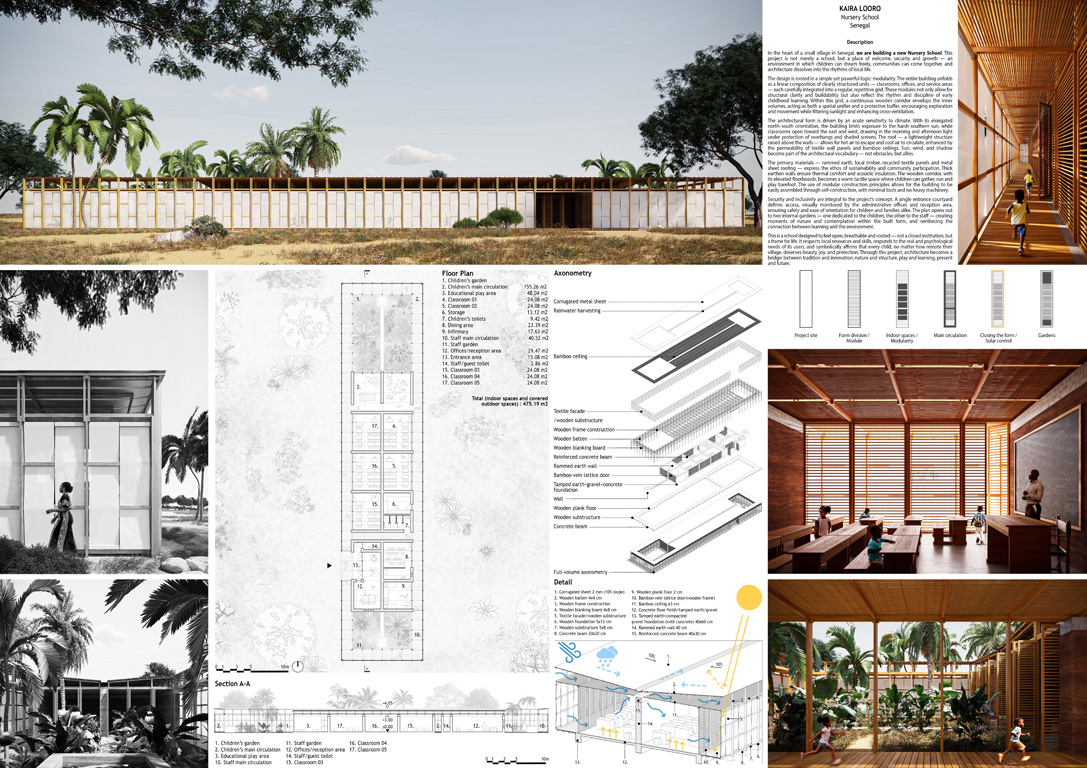
The simplicity and purity of the plan, the modularity, lightness and functionality of the architectural volume.
The competition focuses on early childhood education in rural Sub-Saharan Africa. What does this theme mean to you personally and professionally?
Working on this type of project makes you feel like you’re doing something right, something meaningful – even if you don’t win.
Can you share the core concept of your design and how it addresses the needs of young children and their communities?
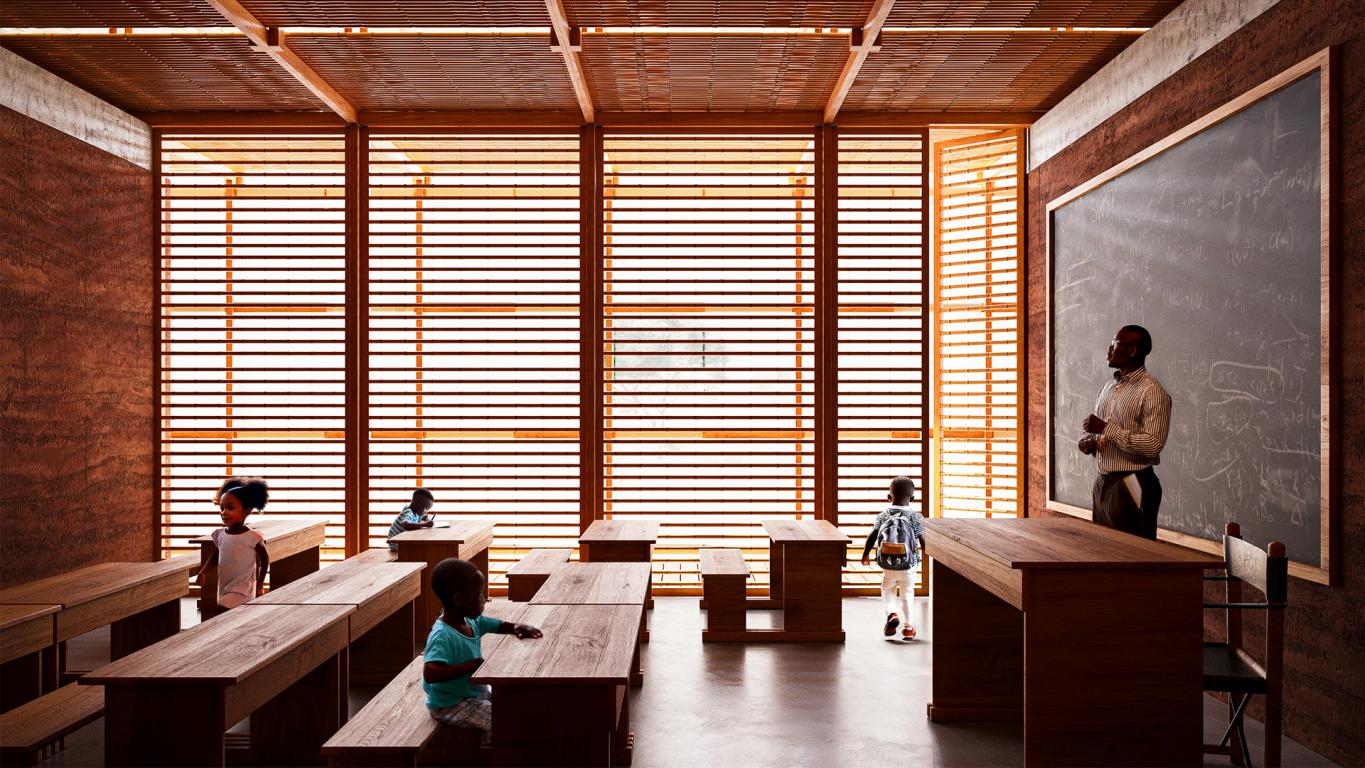
The project was designed to minimize difficulties on the construction site. Thanks to its modularity and the use of local materials that quite literally come from the ground, the local community will have no problem building it. This is what will eventually become a school – a place of hope for the future of local children.
How did the local context and materials influence your design approach?
Every time I take part in the Kaira Looro Competitions, my approach to architecture evolves. You begin to think about how to build structures using materials that come directly from the earth, without relying on machinery. The projects created through this process are always beautifully designed and unique. It’s a truly inspiring experience.
Did you find inspiration in any existing projects—perhaps from previous editions of Kaira Looro or other humanitarian works?
This time, I created my project in just seven days, without drawing inspiration from other projects. I felt like I knew exactly what I was doing, and that I was doing it correctly and purposefully. But honestly, I also understand that when I worked on projects for previous editions, I looked at many past entries, so they might have influenced my thinking to some extent.
What role do you think architecture can play in transforming lives through education, especially in underprivileged areas?
Architecture shapes how we feel, learn, and grow. In underprivileged areas, a well-designed school can restore dignity, create belonging, and give children the confidence to imagine a better future.
What do you think is the social responsibility of architects when designing for vulnerable communities?
Architects designing for vulnerable communities have a profound responsibility to create projects that can be constructed by local residents using only their own resources and skills. Designs must respond sensitively to the local context and employ materials sourced directly from the area, ensuring environmental harmony. Considering the potential social impact of a project provides additional motivation and purpose in the design process.
Knowing that your registration supported humanitarian efforts by Balouo Salo, how did that affect your participation or mindset during the competition?
Knowing that it gave my participation deeper meaning. It reminded me that architecture is not just about ideas, but about real impact on people’s lives.
As part of your award, you’ll join an internship at a leading architecture studio. What do you hope to gain from this experience?
Learning from people with greater knowledge is what drives me forward. I hope this experience will offer exactly that.
Looking ahead, how do you see this recognition impacting your professional journey and how do you hope to contribute to humanitarian architecture in the future?
This recognition gives me hope that my work can matter. I want to create architecture that improves people’s lives, especially those who need it most. I believe I can bring practical and meaningful ideas if I get the chance.