Interview with Kota Shima, Aoi Samitsu, Ishin Matsumoto, So Kobayashi
3rd Award of the 2025 Edition
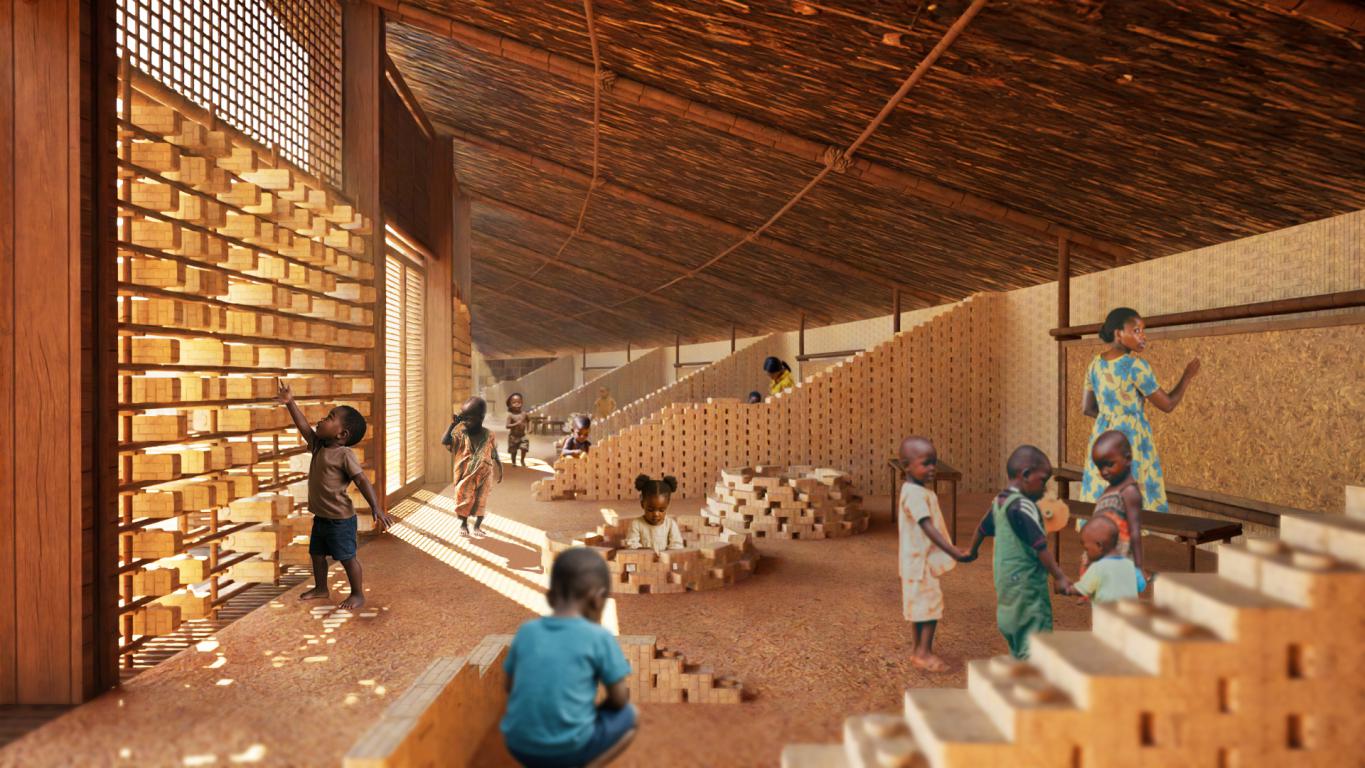
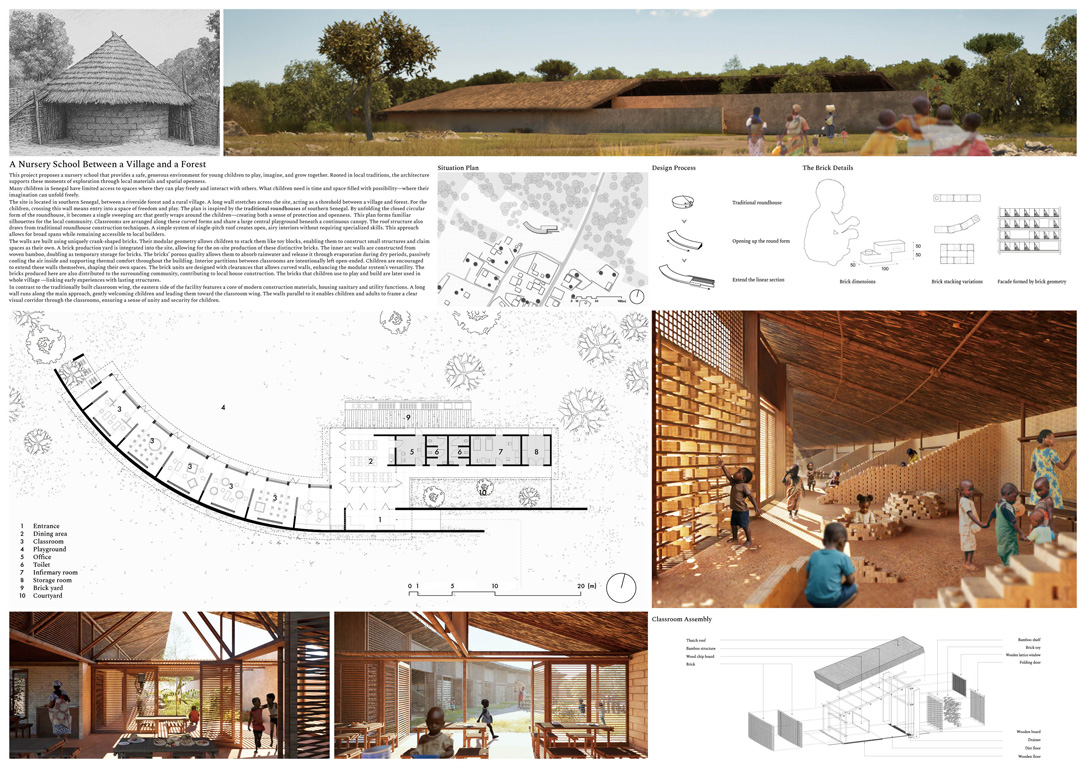
We are classmates in the architecture department of the graduate school, two of us in design, one in structure, and the other in the environmental field. We are truly grateful and honored to receive this award, and to know that our proposal has found such resonance. Our core belief was that the act of play contributes positively to children's development. Beyond offering moments of joy or entertainment, play nurtures creativity and serves as a foundation for social and environmental education. We noticed that children in Senegal often lack the opportunity to take time for themselves. This means they are not guaranteed a safe environment and often do not have the freedom or space to play. On a personal level, I believe that experiences of play in early childhood can have a profound and positive impact later in life. That’s why I felt a strong desire to create a space where children could enjoy time to play freely. From a professional standpoint, I envisioned a way for children to be involved in the process of building as a form of play. This led us to propose a modular block system—an architectural intervention that bridges construction and play. We based our design on the unique conditions of the site, which includes both a village and a forest. While the village represents the rhythm and routines of daily life, we envisioned the forest as a space where children could escape into play. To create a distinct and immersive playground experience, we designed a space that merges with the forest. To emphasize the contrast between structured life and the freedom of play, we intentionally introduced a wall that clearly separates the inside from the outside—marking a transition into the children's world. Our design was strongly influenced by the traditional round-houses with thatched roofs commonly found in southern Senegal. Often used as storage spaces, these roundhouses are a familiar and comforting sight for local communities. We incorporated their spatial composition into our design. We also gained significant insight from their building methods. Traditional construction techniques are not only culturally embedded, but also rational and well-suited to the region’s climate and resources. By studying and incorporating these techniques, we aimed to respect the local balance and ensure that the building could be sustainably passed on to future generations. Yes, we were inspired by several past projects from previous editions of Kaira Looro. We learned a great deal from the architectural expressions and design approaches showcased in those works. In addition, we studied the work of several architects who are active on the African continent, referencing their methods of construction that are well-adapted to local climates and cultural contexts. These examples helped us better understand how to design architecture that is both contextually appropriate and meaningful. In underprivileged areas, I believe that the fundamental responsibility of architecture is to ensure a safe and secure living environment. At the same time, I see education as the cultivation of values necessary for life and the expansion of one’s perspective. Based on these premises, I consider it essential to explore how spatial experience can help transform the values of children and local communities. In our project, we aimed for the architecture itself to spark children’s creativity, while offering adults an opportunity to reflect on the meaning of education through the landscape it creates.” For architects coming from outside, social responsibility lies in enhancing the value of a place while preserving the delicate balance that has been sustained by the local community. This balance includes not imposing aesthetics that disrupt the existing landscape, and avoiding the introduction of buildings that require maintenance beyond the community’s capacity.” We are honored to be able to use what we have learned to help humanitarian aid. From now on, we felt that we would rather continue our design activities while thinking deeply about the social significance of our projects. We see this as a great opportunity to broaden our horizons and update our values, as we have never had the experience of working for a prestigious architectural firm overseas. As architectural designers in the world of the future, we must take responsibility for addressing the various problems facing our planet, including educational disparities. We believe that this was a good opportunity for us to strongly realize this.