Interview with Diego RODRIGUEZ
Special Mention of the 2025 Edition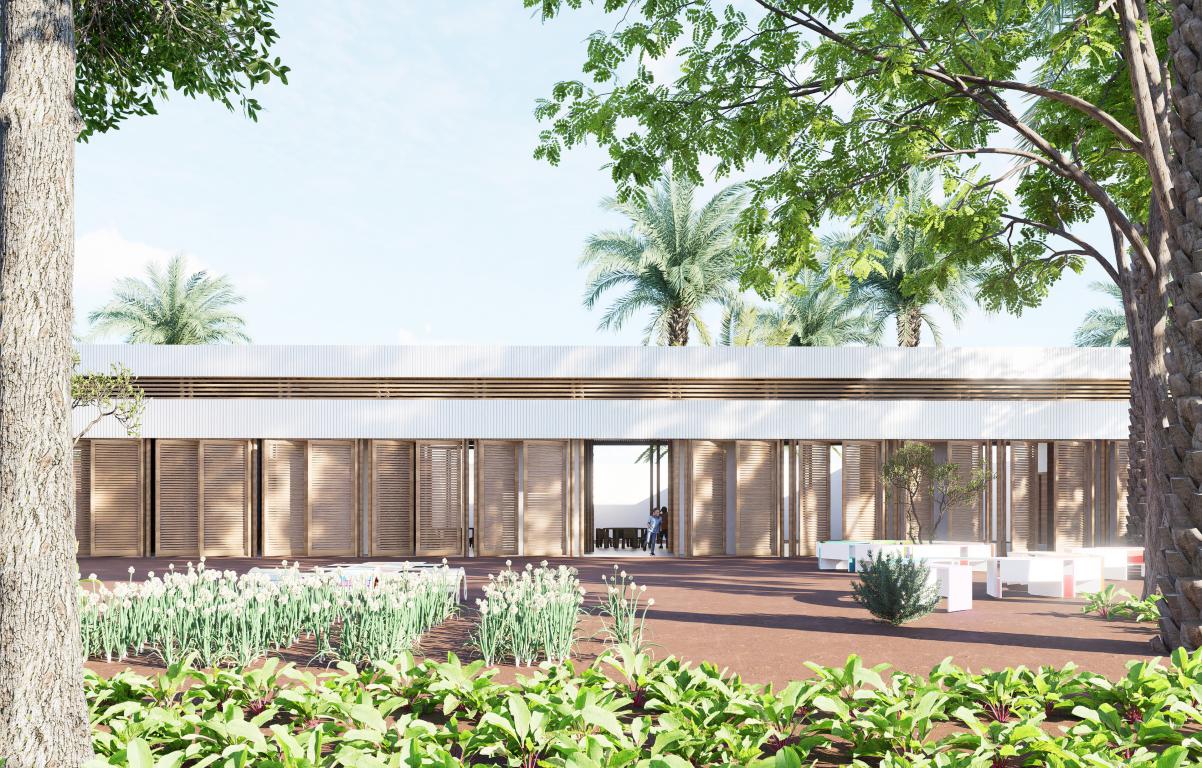
Can you briefly introduce yourself and your team?
My name is Diego Rodriguez, I am a French architect. Our team consists of four partners. This project allowed us to combine our different design approaches, enriching our reflection. The challenges we faced refined our proposal into a smarter and more relevant design.
How did you feel when you received a Special Mention in the Kaira Looro 2025 competition?
Receiving a special mention was very rewarding, as it represents valuable recognition of the work accomplished and the intellectual process engaged throughout the project. This distinction reinforced our confidence in our ideas and collective efforts.
What inspired your project?
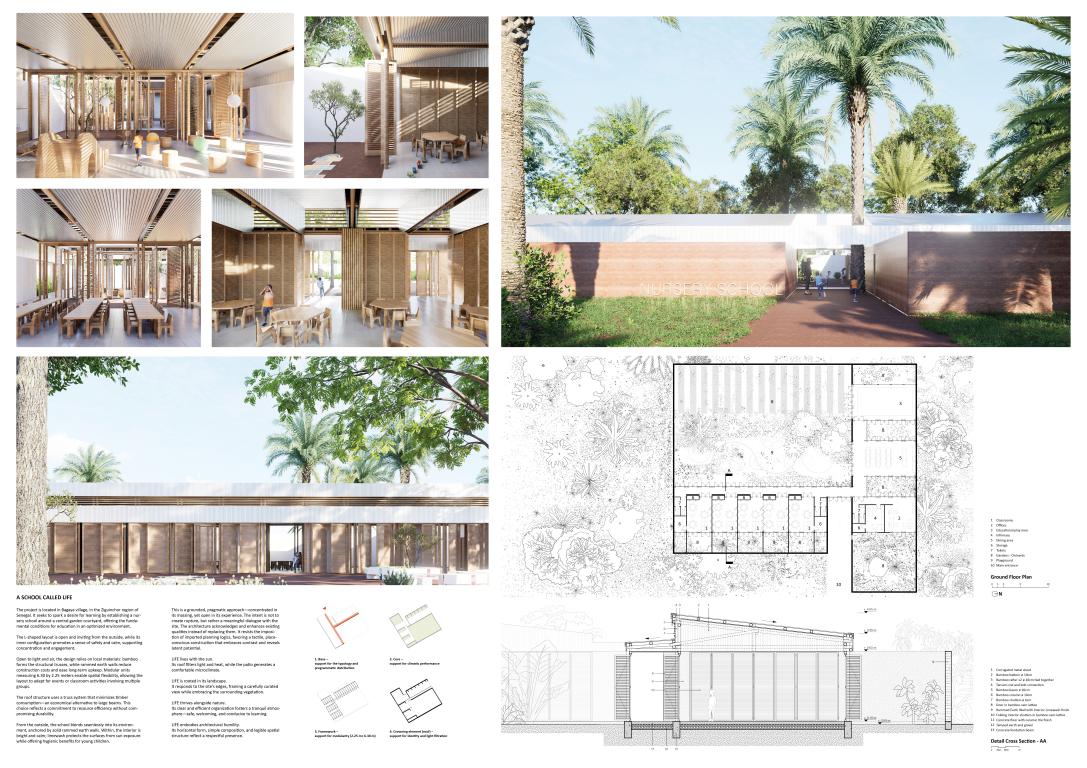
Our initial inspiration came from a reflection and hesitation between two possible directions: creating a school inspired by vernacular village layouts, or adopting a more open and generous approach focused on the courtyard as a fundamental element. We chose the latter. Designing a kindergarten involves creating a playful and educational environment, intuitively awakening architectural sensitivity in young children. We believe these children will become the architects of tomorrow’s world. We were also inspired by Senegalese rural vernacular architecture, notably using local materials such as metal and bamboo.
What does the theme of early childhood education mean to you?
Early childhood education is a crucial period during which children discover the world through direct and intuitive experience. It is a critical developmental phase where architecture plays a major role by fostering active and sensory learning. We believe architecture at this age is a powerful educational tool for sensitizing future generations.
What role can architecture play in supporting vulnerable communities?
Povera' architecture offers a fresh perspective on designing educational facilities tailored to local realities by integrating simple, generous, and effective ecological solutions, such as natural lighting management and passive ventilation, collecting water. Our goal remains to create architecture that feels familiar and accessible through the use of local materials, while innovatively restructuring school spaces to provide versatility and quality for both students and the community which is we think essential in supporting vulnerable communities.
Did the humanitarian purpose of the competition influence your participation?
Absolutely. The humanitarian dimension of this competition strongly influenced our participation, as it places humans at the heart of the architectural process. This approach is fundamental and allows architecture to reconnect with its true essence, sometimes lost in large-scale projects that are often driven by standards lacking common sense.