Interview with Sebastian Lares Arrechea , Francisco Comelli, Juan Manuel Lanziano, Victoria Gomis
Special Mention of the 2025 Edition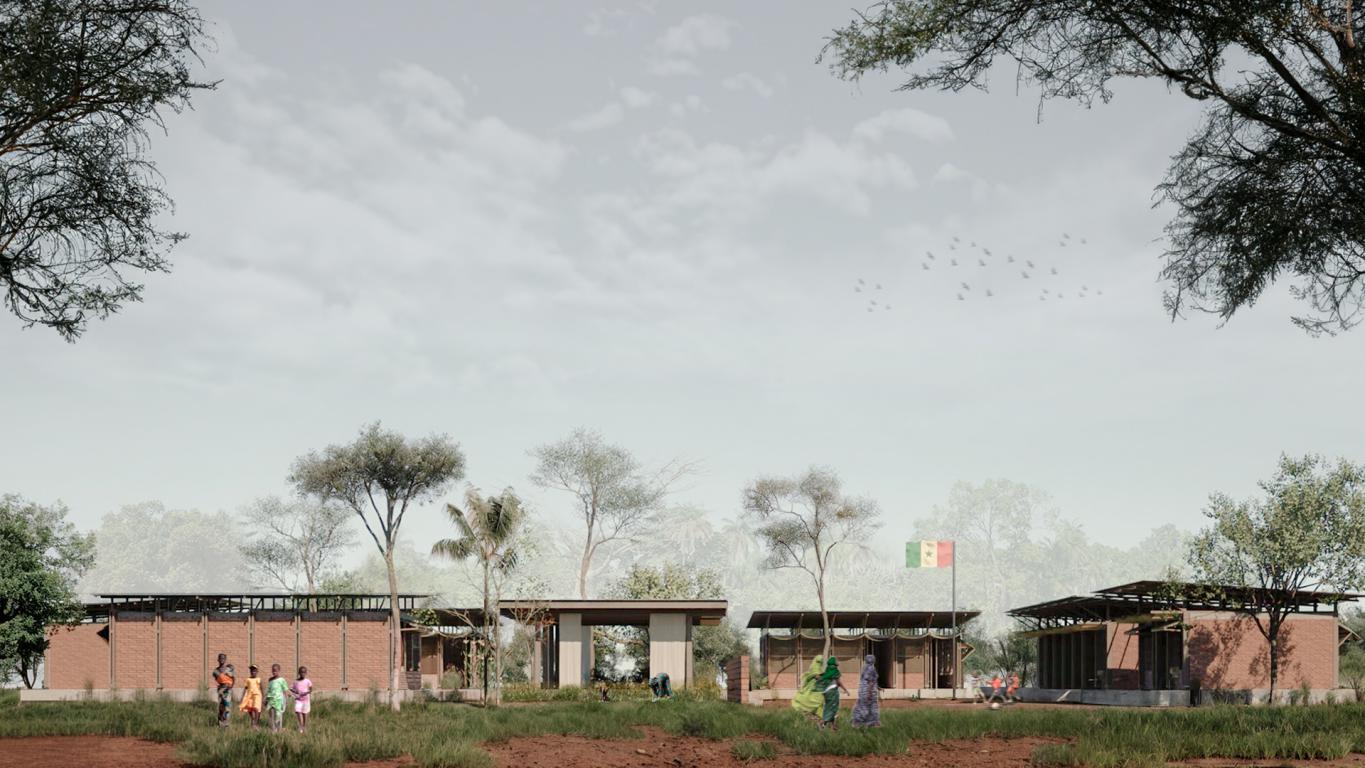
Can you briefly introduce yourself and your team?
We are a group of four students from the Faculty of Architecture and Urbanism at the National University of La Plata, Argentina. We met a little over a year ago while taking different courses and, driven by mutual admiration for each other’s work and shared experiences within the University, we decided to form the team to participate in the competition. We strongly believe that each one of us brings unique skills to the table, and with strong group communication, are able to work in perfect harmony.
How did you feel when you received a Special Mention in the Kaira Looro 2025 competition?
We honestly did not expect it! We were speechless for a few moments, and after calming down, we shared the news with our professors, friends, and families, who were just as excited as we were. This represents our first big achievement as a team, so it was a very joyful moment, which we are all very proud of. We are deeply grateful to the organizers for this competition and the organizations that took part, which allowed us to contribute our grain of sand to humanitarian architecture, not only in Senegal, but to the topic as a whole. We embarked on this project without focusing on the competition results itself, so receiving the mention was a truly gratifying surprise. It was a deeply enriching experience, especially considering the number and impeccable quality of the projects submitted from all around the world.
What inspired your project?
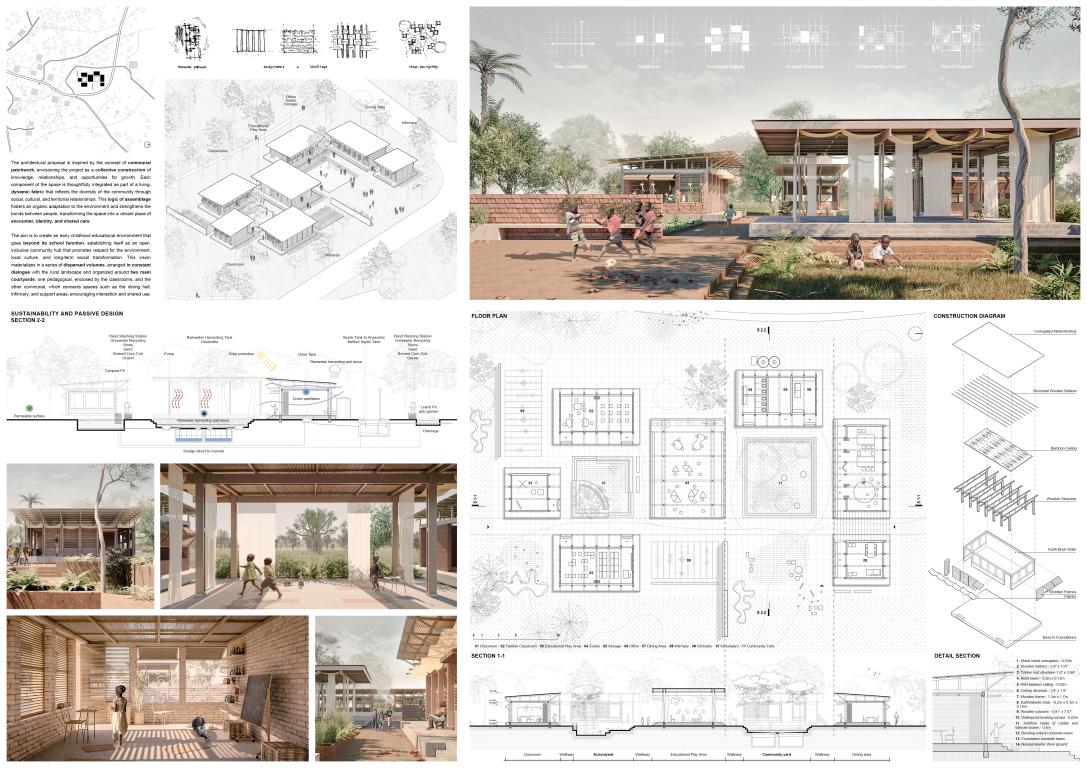
The architectural concept was inspired by the idea of communal patchwork, a traditional sewing technique that consists of joining different pieces of fabric to form a coherent and functional whole. We interpreted the concept to meet the needs that were clearly established in the guidelines. In a similar way, our project seeks to be a collective construction of knowledge, relationships, and growth opportunities. Each element of the space, from its material aspects to its functional organization, represents a piece connected to the others through the invisible social, cultural, and territorial ties, forming a “living fabric” that reflects the diversity and uniqueness of the community. The space is then understood as the result of these meaningful connections that provide continuity and joy to the whole.
What does the theme of early childhood education mean to you?
To us, the main goal was to create an educational environment that goes beyond the traditional school function, an open community landmark that promotes respect for the environment and local culture, that has a positive impact in the development of this crucial phase in the life of a person. One thing that stood during the entire process was how, in a complex socio-economic context, the school could become a space of opportunity, resilience, and transformation. It means having the chance to design spaces where the foundations of learning, curiosity, and identity are formed. It’s not only about meeting functional needs, but also about creating environments that stimulate imagination, support emotional development, and offer safety, care, and a sense of belonging. It’s not just about drawing walls and roofs, but about building worlds, places that invite children to explore, have fun, learn, and imagine; spaces where they not only learn and grow, but feel valued, heard, and supported.
What role can architecture play in supporting vulnerable communities?
We stand by the idea that architecture goes far beyond the construction of physical spaces, and that its fundamental role is to meet a collective need; in this case, to create conditions of dignity. Working with vulnerable communities challenges us as future architects to step outside the academic or aesthetic bubble and be willing to listen. It is essential to understand real needs, local traditions, and ways of inhabiting. Within that dialogue is where a more human, sensitive, and committed architecture emerges.
Did the humanitarian purpose of the competition influence your participation?
Absolutely! The humanitarian purpose of the competition was one of the main reasons we decided to take part. In academic settings, these kinds of topics are rarely addressed in depth, so this opportunity allowed us to propose real solutions to a both complex and endemic challenge. It also pushed us out of our comfort zone and brought us closer to realities far more different, diverse, and more fragile than our own, which if it had not been for this competition, we probably would not have had the chance to do so. It was a challenge, but also an incredible opportunity for learning and growing. Researching other cultures, ways of life, and especially the real needs and shortages faced by communities in extreme situations led us to rethink not only how we design, but also the very purpose of what we can do as architects. The reality is that architecture shapes behaviors, and it really is only through architecture that we are able to create a more dynamic, more friendly, and a more humane society.